⏱️ Day 10 in one minute
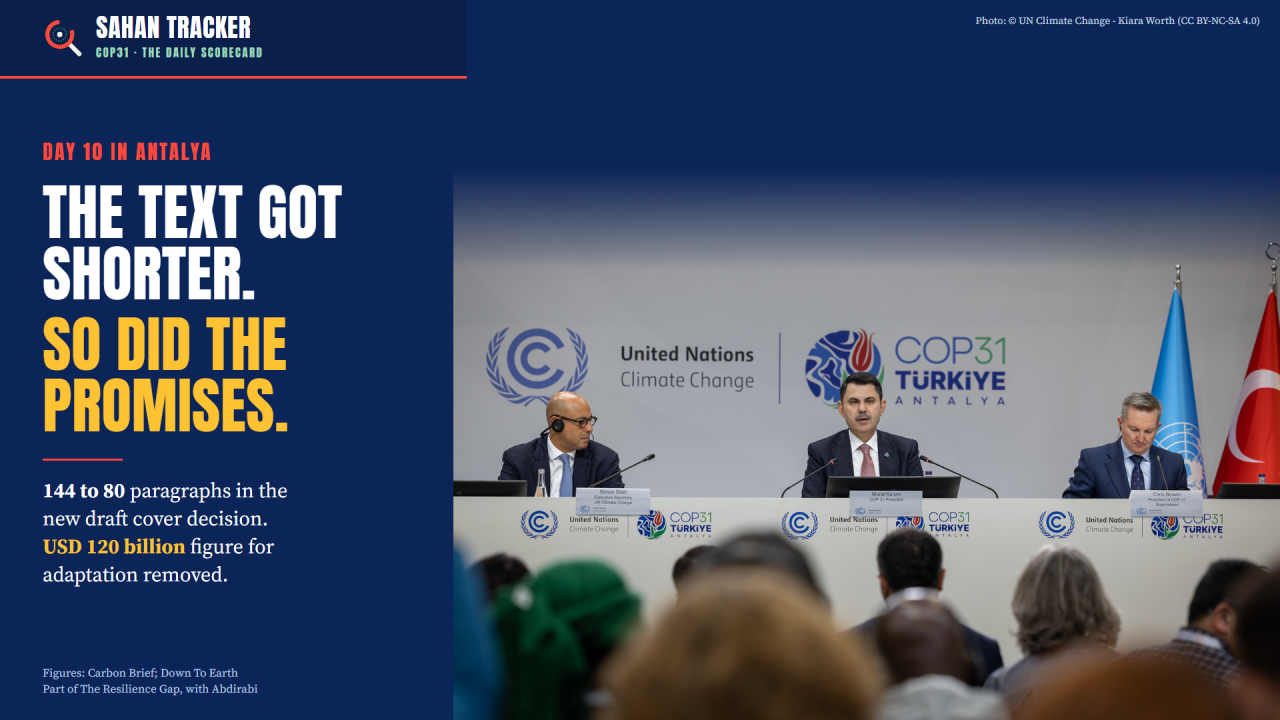
- The second draft of the cover decision came out several hours late. It is about half as long: 80 paragraphs instead of 144.
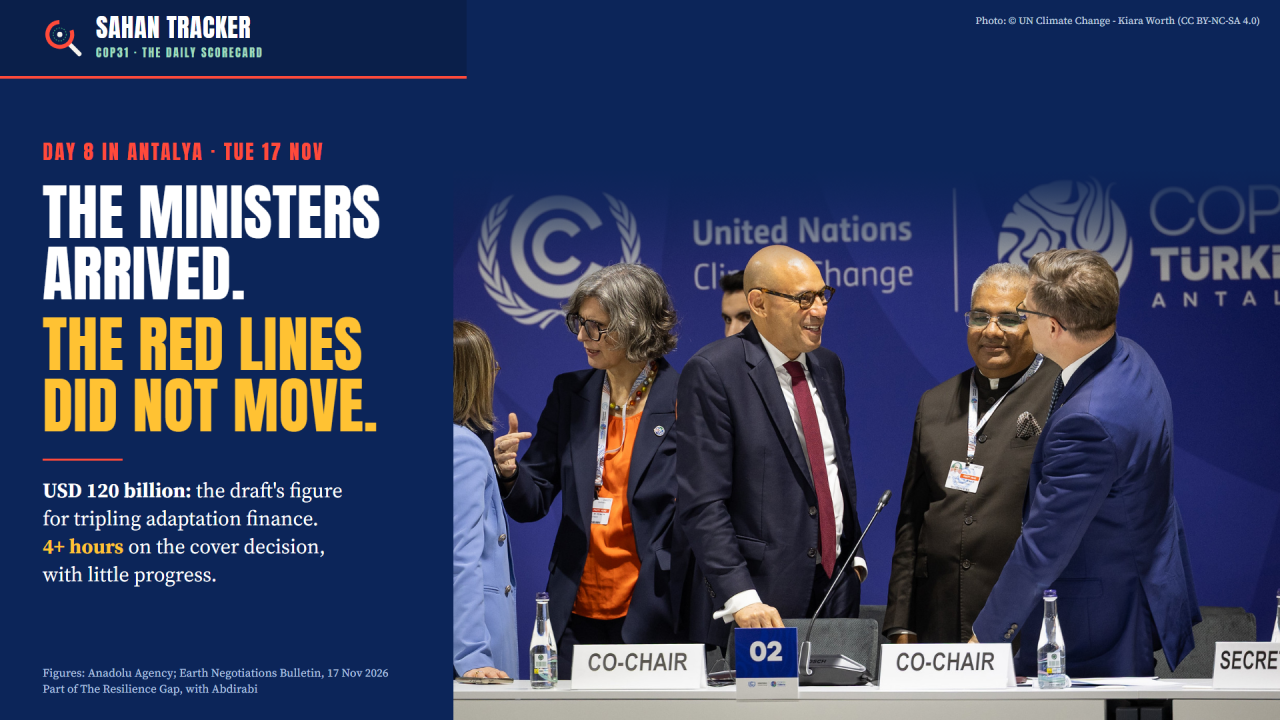
- The draft no longer mentions fossil fuels, and it drops the USD 120 billion figure for tripling adaptation finance.
- The target to raise electricity to 35% of the world’s energy use by 2035 stays in.
- Panama said it will not join a consensus that does not meet its principles, and will formally object.
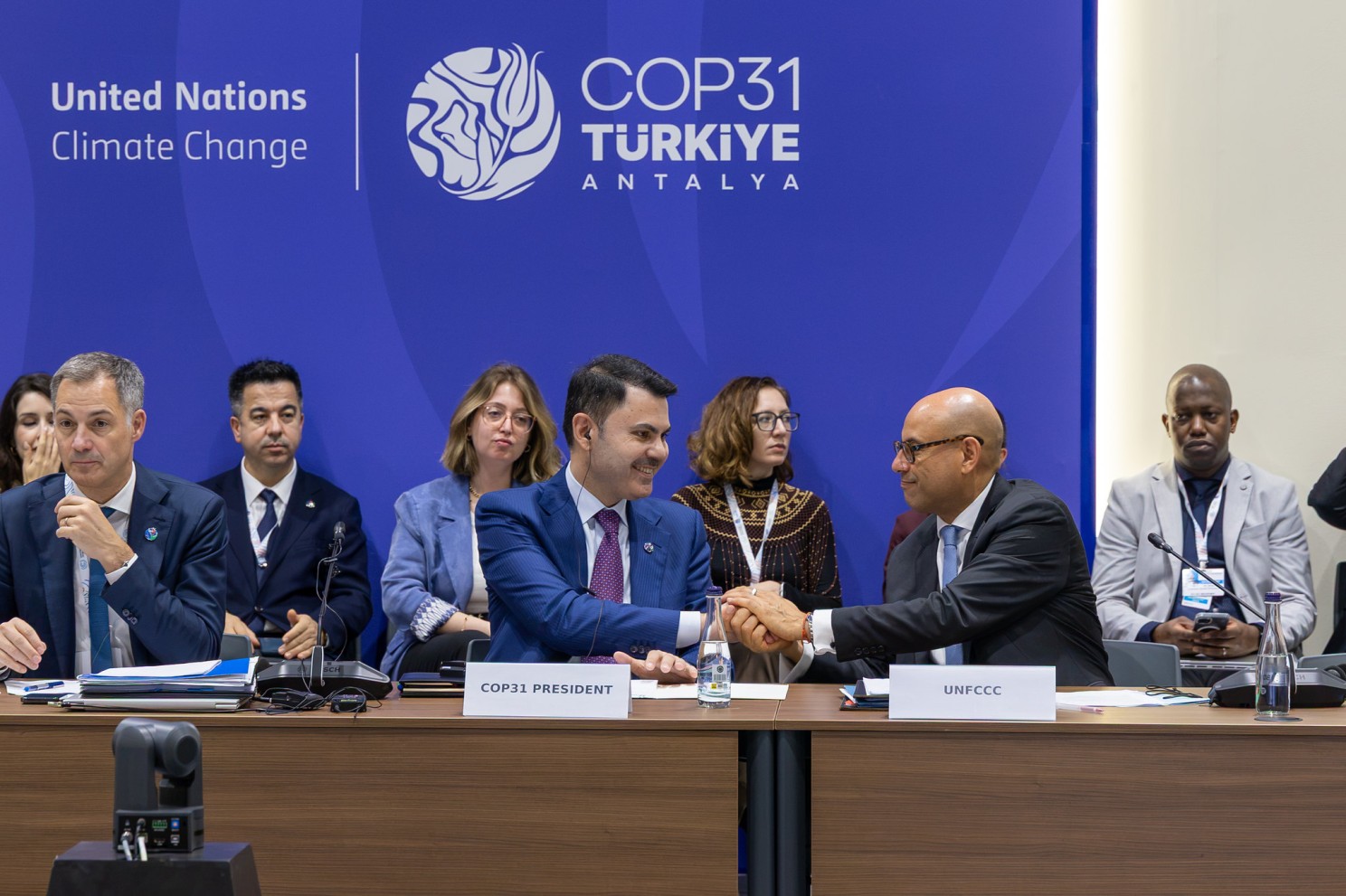
- COP31 President Murat Kurum said: “This is not the final text.” Talks may run past Friday.
🟢 What moved forward?
A shorter text. The Presidencies cut the cover decision from 144 to 80 paragraphs, according to Carbon Brief and Down To Earth. The Earth Negotiations Bulletin said the new texts have “significantly fewer brackets”, meaning fewer words still in dispute.
New talks on overshoot. Carbon Brief reports that the draft “decides” to hold a high-level dialogue at COP32 on the science of overshooting 1.5°C. It also invites the IPCC, the UN’s science panel, to present its reports before the 2028 global stocktake.
Mountains and the Ocean. The draft sets up a work programme on mountains and a high-level dialogue at COP32. It also asks for a report on ocean action, due in June 2028 (Carbon Brief).
Agreement on a few smaller items. Countries agreed to send the text on national adaptation plans to the June 2027 session as an informal note. On the Climate Technology Centre, they agreed how it will work with the UN Environment Programme.
Plans to leave fossil fuels, outside the text. Switzerland published its roadmap to move away from fossil fuels. The Earth Negotiations Bulletin counts six European countries with published roadmaps, and 21 more countries that plan to publish one.
🔴 What got stuck?
Fossil fuels left the text. Carbon Brief, Down To Earth, Climate Home News and IPS all report that the second draft no longer mentions fossil fuels. It also drops the welcome for Brazil’s roadmap to move away from them.
The tripling number. Carbon Brief reports that the USD 120 billion adaptation finance target “has gone”. Climate Home News says the draft delays a number until COP32. IPS says it launches the “Antalya-to-Addis Ababa Roadmap for Adaptation and Resilience Finance”, but with no target and no baseline. Down To Earth reads it differently: it says the draft keeps a pathway to triple adaptation finance by 2035 under the climate finance work programme. The sources do not agree, so the final text will matter.
Softer words. Carbon Brief reports that “rapid and substantial” cuts to methane became just “reductions”. On trade, “expresses serious concerns” became “notes the concerns”.
Support for national technology offices. National bodies that link countries to the Climate Technology Centre get about USD 5,000 each. The G77 and China asked for at least USD 50,000. Senegal, Somalia and Uganda said USD 5,000 is not enough. Japan, Norway, Canada and the UK opposed writing any amount. The LDCs called that a red line.
A deleted warning. In the talks on the Standing Committee on Finance, countries deleted a paragraph that noted, among other things, the decline in global adaptation finance.
The stocktake dialogue. Countries could not agree on the report of the dialogue that helps countries use the first global stocktake in their national plans. A procedural decision will follow.
📝 What changed in the cover decision?
This was the main story of Day 10. Here is the first draft (16 November) next to the second draft (19 November), based on Carbon Brief, Climate Home News, Down To Earth, Agence Europe and IPS:
Length: 144 paragraphs, now 80.Fossil fuels: a faster move away from them and a phase-out goal, now no mention at all.Adaptation finance: at least USD 120 billion a year by 2035, now no number in most reports.Electrification: 35% by 2035, still in. Agence Europe notes there is no longer a dedicated reference to “clean” electrification.Overshoot: a programme on the science, now a high-level dialogue at COP32.Methane: “rapid and substantial reductions”, now “reductions”.
- Length: 144 paragraphs, now 80.
- Fossil fuels: a faster move away from them and a phase-out goal, now no mention at all.
- Adaptation finance: at least USD 120 billion a year by 2035, now no number in most reports.
- Electrification: 35% by 2035, still in. Agence Europe notes there is no longer a dedicated reference to “clean” electrification.
- Overshoot: a programme on the science, now a high-level dialogue at COP32.
- Methane: “rapid and substantial reductions”, now “reductions”.
Reactions. Agence Europe reports that African negotiators said the COP30 promise to triple adaptation finance “must not be removed” from the final decision. Panama’s Environment Minister Juan Carlos Navarro wrote to the Presidencies that Panama “will not join any consensus, and will formally object in the closing plenaries” to a decision that does not meet its principles.
Why it matters for LDCs: the LDCs fought all week for a number, a baseline and a way to track adaptation finance. In this draft, most of that is gone or pushed to next year.
💰 The money picture
USD 120 billion: the adaptation finance figure in the first draft, removed from the second (Carbon Brief).USD 5,000: what each national technology office gets now. The G77 and China asked for at least USD 50,000 (Earth Negotiations Bulletin).USD 106.2 million: the Climate Technology Centre budget. The G77 and China still want “at least” in front of it. The EU opposes.USD 1 trillion: the aim of a new agreement between Australia and the Republic of Korea to unlock money for cutting emissions, presented on Thursday (Earth Negotiations Bulletin).
- USD 120 billion: the adaptation finance figure in the first draft, removed from the second (Carbon Brief).
- USD 5,000: what each national technology office gets now. The G77 and China asked for at least USD 50,000 (Earth Negotiations Bulletin).
- USD 106.2 million: the Climate Technology Centre budget. The G77 and China still want “at least” in front of it. The EU opposes.
- USD 1 trillion: the aim of a new agreement between Australia and the Republic of Korea to unlock money for cutting emissions, presented on Thursday (Earth Negotiations Bulletin).
🗣️ Who said what?
- Murat Kurum, COP31 President: “This is not the final text.”
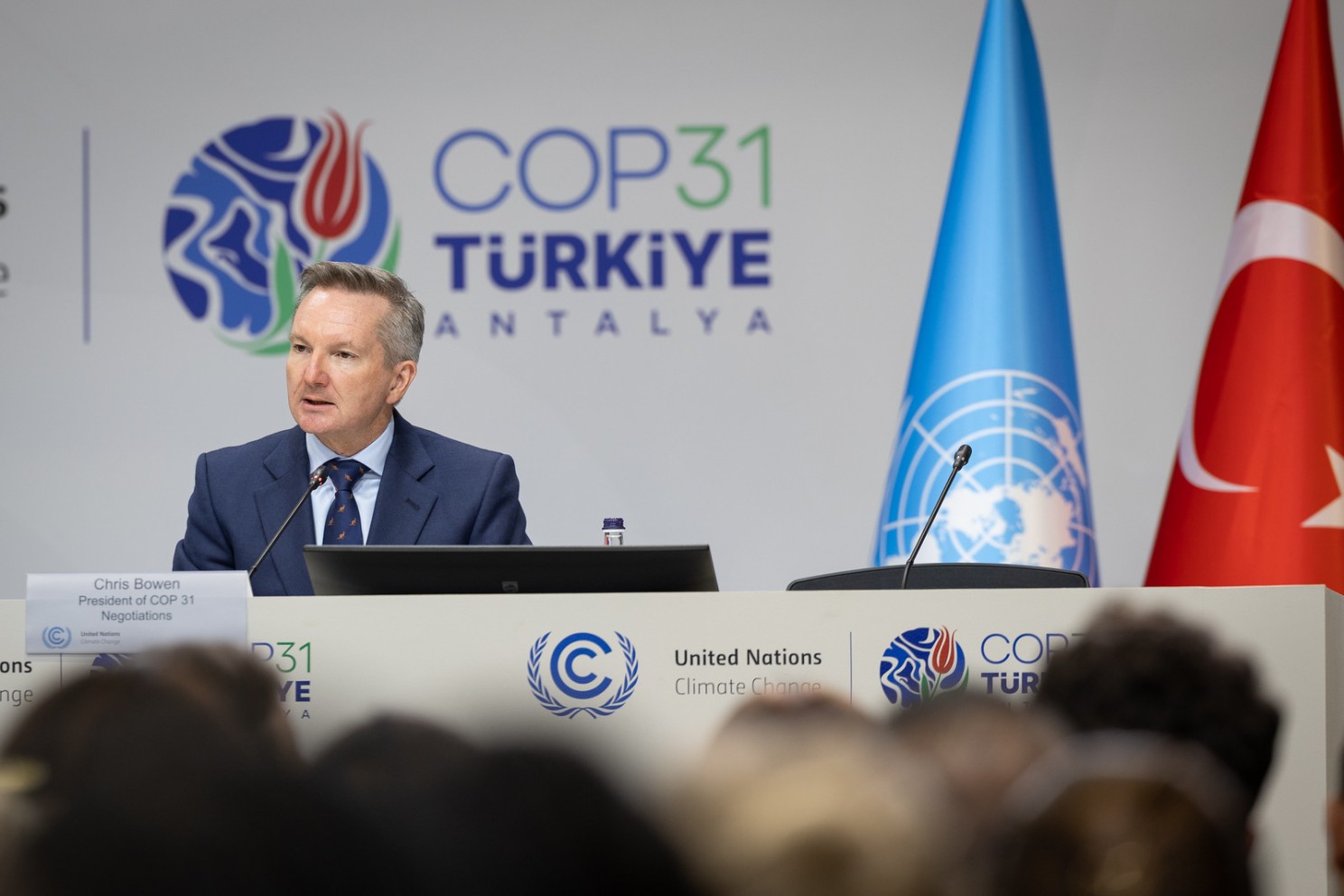
- Chris Bowen, President of Negotiations: he will not leave the meeting rooms “until it is very clear to us that we have a consensus” (Agence Europe).
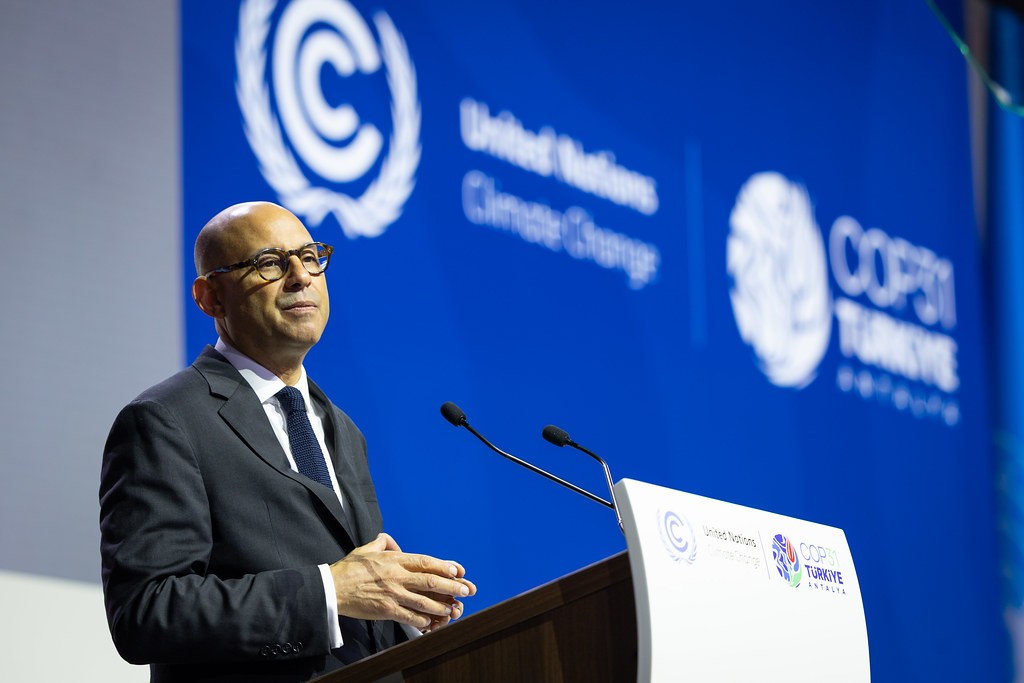
- Simon Stiell, UN climate chief: “These are crucial days ahead for climate cooperation. And we have no time to lose” (IPS).
- Panama: will formally object to a decision that does not meet its principles.
- African negotiators: the promise to triple adaptation finance “must not be removed”.
- One long-time delegate, on the quiet ministerial talks: “It’s strange not to hear a peep, in public at least, from the ministers conducting consultations, and a bit worrying.”
🧭 So, who stands where?
In one line: the Presidencies cut the text to find a deal, and the cuts fell hardest on fossil fuels and on the adaptation finance number. Countries that wanted those words, from Panama to the African Group, now have one day to bring them back.
💡 My takeaways from Day 10
One. Shorter is not always better. Half the text is gone. The question is what went first. Here, it was fossil fuels and the USD 120 billion.
Two. Voluntary goals stayed, hard words left. The 35% electrification goal began as a voluntary pledge and made it into the draft. The words on fossil fuels, which countries agreed in Dubai, did not.
Three. Small numbers tell the story. National technology offices get USD 5,000 each. Developing countries asked for USD 50,000, and some rich countries do not want any number written down. On the same day, a paragraph noting the fall in adaptation finance was deleted.
📖 Words of the day
Second draft: a new version of a text, written after countries react to the first one.Formal objection: when a country says no in the closing meeting. Because COPs decide by consensus, one objection can block a decision.High-level dialogue: a meeting of ministers to discuss a topic, without negotiating a text.National designated entity: the national office that links a country to the Climate Technology Centre.Roadmap to move away from fossil fuels: a national plan that sets out how and when a country will reduce its use of oil, gas and coal.Procedural decision: a short decision that only says when a topic will be discussed again.
- Second draft: a new version of a text, written after countries react to the first one.
- Formal objection: when a country says no in the closing meeting. Because COPs decide by consensus, one objection can block a decision.
- High-level dialogue: a meeting of ministers to discuss a topic, without negotiating a text.
- National designated entity: the national office that links a country to the Climate Technology Centre.
- Roadmap to move away from fossil fuels: a national plan that sets out how and when a country will reduce its use of oil, gas and coal.
- Procedural decision: a short decision that only says when a topic will be discussed again.
👀 What to watch tomorrow?
- A third draft of the cover decision, which Down To Earth says is expected.
- Whether the words on fossil fuels and the tripling number come back.
- Whether Panama, or any other country, objects in the closing plenary.
- Whether the talks run into the weekend.
See you tomorrow.
Abdirabi
📚 Sources
Earth Negotiations Bulletin (IISD), daily report for 19 November 2026: https://enb.iisd.org/antalya-un-climate-change-conference-cop31-daily-report-19nov2026Carbon Brief, New: second draft “cover decision” at COP31: https://connect.carbonbrief.org/t/new-second-draft-cover-decision-at-cop31/188Climate Home News, COP31 Bulletin Day 10: https://www.climatechangenews.com/2026/11/19/cop31-antalya-turkiye-australia-ministers-agremeent-fossil-fuels-electrification/Down To Earth, COP31 update: cover decision drafts, climate finance and 35×35: https://www.downtoearth.org.in/climate-change/cop31-update-cover-decision-drafts-climate-finance-and-35×35Agence Europe, Second COP31 draft decision raises doubts about states’ ability to agree: https://agenceurope.eu/en/bulletin/article/13985/1/second-cop31-draft-decision-raises-doubts-about-states-ability-to-agree-on-climate-crisis-responseIPS via allAfrica, COP31 nears close as “weak”, “compromised” draft draws fierce backlash: https://allafrica.com/stories/202611200097.html
- Earth Negotiations Bulletin (IISD), daily report for 19 November 2026: https://enb.iisd.org/antalya-un-climate-change-conference-cop31-daily-report-19nov2026
- Carbon Brief, New: second draft “cover decision” at COP31: https://connect.carbonbrief.org/t/new-second-draft-cover-decision-at-cop31/188
- Climate Home News, COP31 Bulletin Day 10: https://www.climatechangenews.com/2026/11/19/cop31-antalya-turkiye-australia-ministers-agremeent-fossil-fuels-electrification/
- Down To Earth, COP31 update: cover decision drafts, climate finance and 35×35: https://www.downtoearth.org.in/climate-change/cop31-update-cover-decision-drafts-climate-finance-and-35×35
- Agence Europe, Second COP31 draft decision raises doubts about states’ ability to agree: https://agenceurope.eu/en/bulletin/article/13985/1/second-cop31-draft-decision-raises-doubts-about-states-ability-to-agree-on-climate-crisis-response
- IPS via allAfrica, COP31 nears close as “weak”, “compromised” draft draws fierce backlash: https://allafrica.com/stories/202611200097.html
First published on LinkedIn in The Resilience Gap newsletter by Abdirabi Mohamed. Read the original.