Author: admin

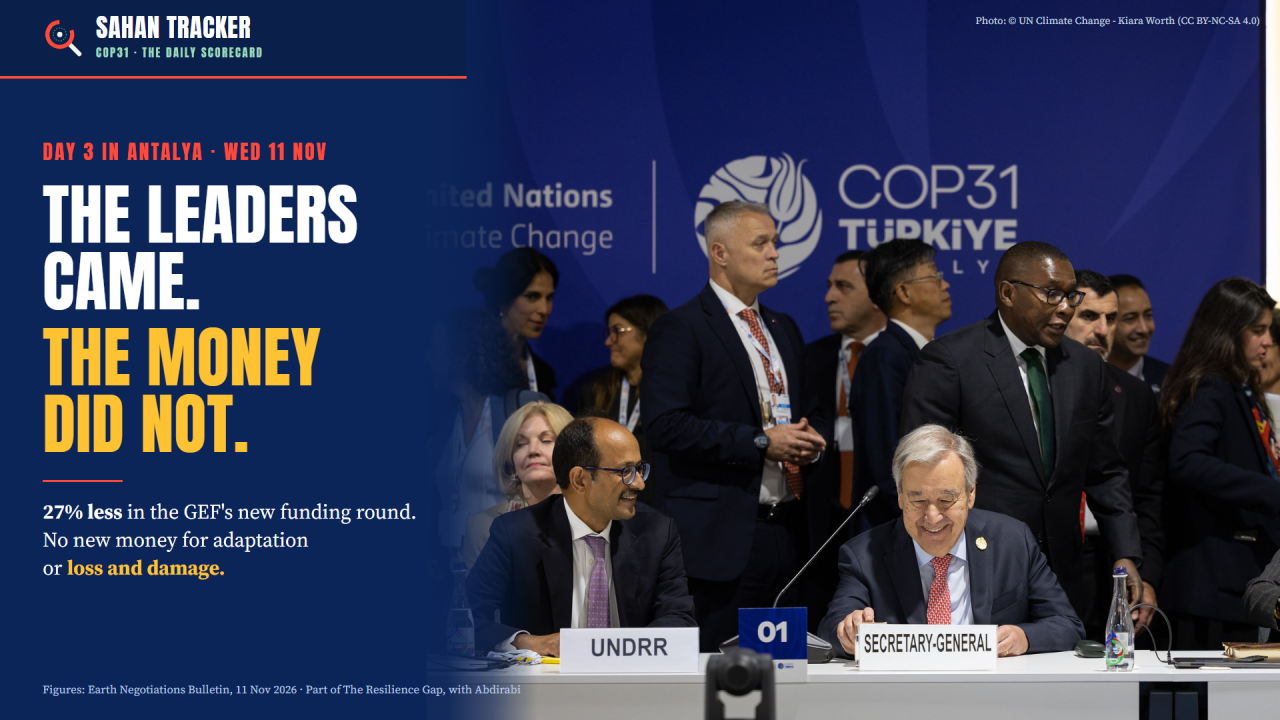
  • Sahan Tracker | COP31, Day 3: The leaders came. The money did not.

    Sahan Tracker | COP31, Day 3: The leaders came. The money did not.

    Wednesday 11 November 2026 · Antalya, Türkiye · Part of The Resilience Gap, with Abdirabi

    What is Sahan Tracker? It is my daily update during COP31, the UN climate conference in Antalya, Türkiye (9 to 20 November 2026). During COP31, The Resilience Gap comes to you every day as Sahan Tracker, focused on what is happening inside the negotiation rooms. After COP31, we go back to one edition a week.

    These are my notes from the day. I follow the talks from home, reading the Earth Negotiations Bulletin, the UN, journalists and colleagues who are in the rooms, and I put it together in plain words. Every hard word gets an explanation.
    ⏱️ Day 3 in one minute

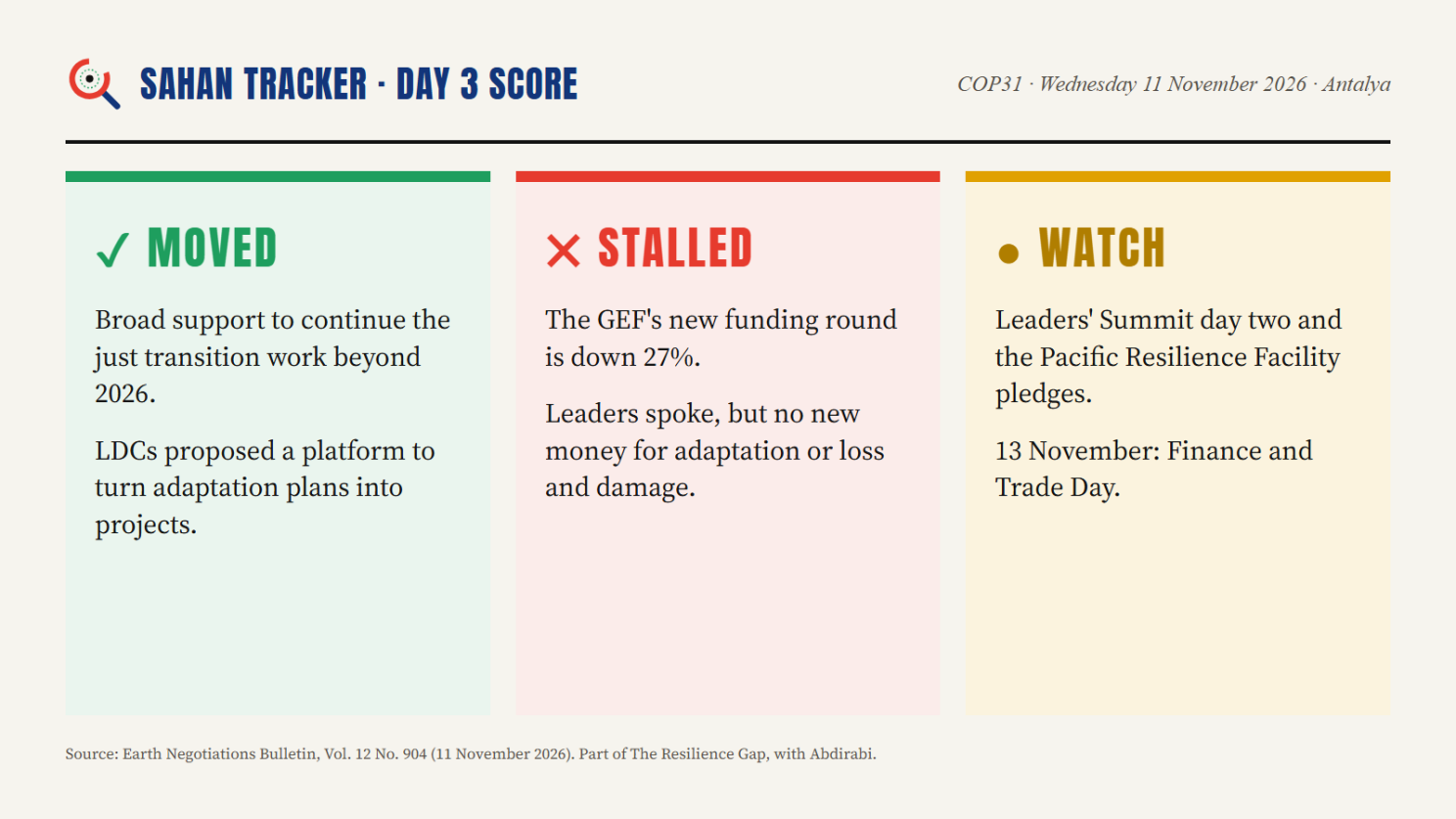
    The Antalya Leaders’ Summit opened. Heads of state and government came to give the talks a political push, while negotiators kept working in the other rooms.UN Secretary-General António Guterres called for a “climate justice compact” and a windfall tax on fossil fuel profits. It was his last COP speech as UN chief.The Global Environment Facility (GEF), one of the main climate funds, has 27% less money in its new funding round. Developing countries were strongly disappointed.The least developed countries (LDCs) proposed a new platform to turn their national adaptation plans into real projects. Norway, the EU, the UK and Japan are worried it would become a new institution.No new money for adaptation or loss and damage was reported on Day 3.
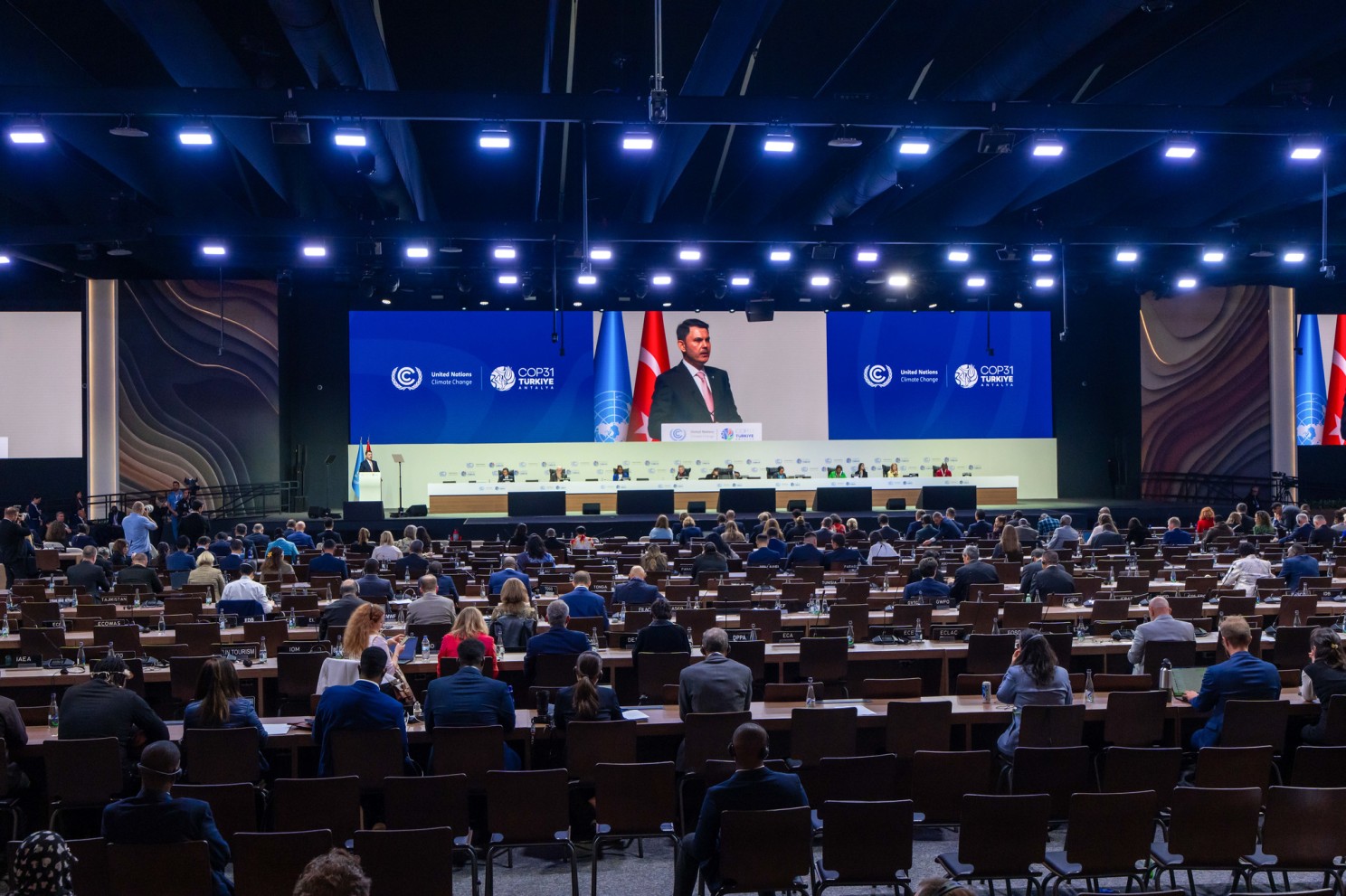
    The High-Level Opening Plenary in Antalya, 11 November. Photo: © UN Climate Change - Kubilay Ciftci (CC BY-NC-SA 4.0)
    The High-Level Opening Plenary in Antalya, 11 November. Photo: © UN Climate Change – Kubilay Ciftci (CC BY-NC-SA 4.0)
    • The Antalya Leaders’ Summit opened. Heads of state and government came to give the talks a political push, while negotiators kept working in the other rooms.
    • UN Secretary-General António Guterres called for a “climate justice compact” and a windfall tax on fossil fuel profits. It was his last COP speech as UN chief.
    • The Global Environment Facility (GEF), one of the main climate funds, has 27% less money in its new funding round. Developing countries were strongly disappointed.
    • The least developed countries (LDCs) proposed a new platform to turn their national adaptation plans into real projects. Norway, the EU, the UK and Japan are worried it would become a new institution.
    • No new money for adaptation or loss and damage was reported on Day 3.

    🟢 What moved forward?

    The just transition work continues. A just transition means a fair shift to clean economies, where workers and communities are not left behind. Countries broadly agreed to keep the work programme going beyond 2026, next to the new just transition mechanism. The LDCs explained the difference simply: the work programme gives political guidance, and the mechanism turns it into practice. Farmers asked for a seat in the mechanism.

    The GEF talks have a starting text. Countries agreed to use the draft guidance to the GEF as the basis for the talks. Guidance is the set of instructions the COP gives to a fund each year.

    A plan to put adaptation plans to work. The LDCs proposed an “LDC NAP implementation platform”. A NAP is a national adaptation plan, a country’s plan to prepare for climate impacts. The platform would help countries prepare programmes, match their priorities with finance and build local capacity to deliver. The LDCs say it needs no new institution and would report through their expert group (the LEG). Draft conclusions and a draft decision are coming.

    The cutting-emissions programme will continue. Countries broadly support continuing the mitigation work programme, to 2030 or 2040. South Africa, Egypt and The Gambia want stronger links to finance, technology and training.

    The gender text was welcomed. A new draft on gender was broadly welcomed.

    🔴 What got stuck?

    Who should pay more into the GEF? The EU, Canada and the Environmental Integrity Group (EIG, a group including Switzerland and South Korea) welcomed the new round and invited more money from “countries in a position to do so”. The Like-Minded Developing Countries and the Arab Group opposed that phrase. For them, it shifts the duty to pay away from developed countries.

    How to measure vulnerability. The G77 and China, Latin American countries (AILAC), the small island states (AOSIS) and the African Group oppose the GEF’s new categories of vulnerability.

    How much money the Green Climate Fund needs. The African Group asked why developed countries will not engage on reviewing how much money the Green Climate Fund needs. The EU said it is willing to discuss. The Co-Chairs will produce a shorter text.

    Plans without money. In the talks on national adaptation plans, developing countries criticised counting South-South and private money as support. AOSIS and the LDCs asked for separate data for LDCs and small island states. Many developing countries want NAPs to stay on the agenda permanently.

    When to update adaptation reporting. The least developed countries, the African Group, AOSIS, AILAC and others want new guidance on adaptation communications (the reports where countries share their adaptation needs and actions) adopted by 2028. The UK, EU, Japan, Canada, the Like-Minded Developing Countries and the Arab Group want to wait until after the 2028 transparency review.

    The science numbers. Russia, India and the Arab Group asked to delete the estimate of “1.47 ± 0.13°C” of warming for 2026 and to cut text on overshooting 1.5°C.

    A budget that does not grow. The LDCs, landlocked countries (LLDCs), India and Brazil are concerned that the 2027 budget of the Climate Technology Centre and Network (CTCN) stays at 2026 levels.

    Small delegations stretched thin. With leaders in town, negotiators had to leave their rooms for high-level events. One delegate called it “a game of musical chairs”. Talks ran into the late evening.

    💰 The money picture

    Day 3 was the day leaders spoke. But the numbers did not move in the right direction.

    GEF-9 is down 27%. GEF-9 is the ninth funding round of the Global Environment Facility. The LDCs asked the guidance to recognise the goals of tripling fund flows and tripling adaptation finance. Instead, the fund is shrinking.The forest fund is still short. The Tropical Forest Forever Facility (TFFF) has about USD 7.9 billion pledged against a USD 10 billion start-up target. No government announced a new pledge at the event.No new money for adaptation or loss and damage was reported on Day 3.

    • GEF-9 is down 27%. GEF-9 is the ninth funding round of the Global Environment Facility. The LDCs asked the guidance to recognise the goals of tripling fund flows and tripling adaptation finance. Instead, the fund is shrinking.
    • The forest fund is still short. The Tropical Forest Forever Facility (TFFF) has about USD 7.9 billion pledged against a USD 10 billion start-up target. No government announced a new pledge at the event.
    • No new money for adaptation or loss and damage was reported on Day 3.

    Guterres called for a windfall tax on fossil fuel profits. The Earth Negotiations Bulletin noted it could fill the “notoriously empty coffers” of climate institutions.

    🗣️ Who said what?
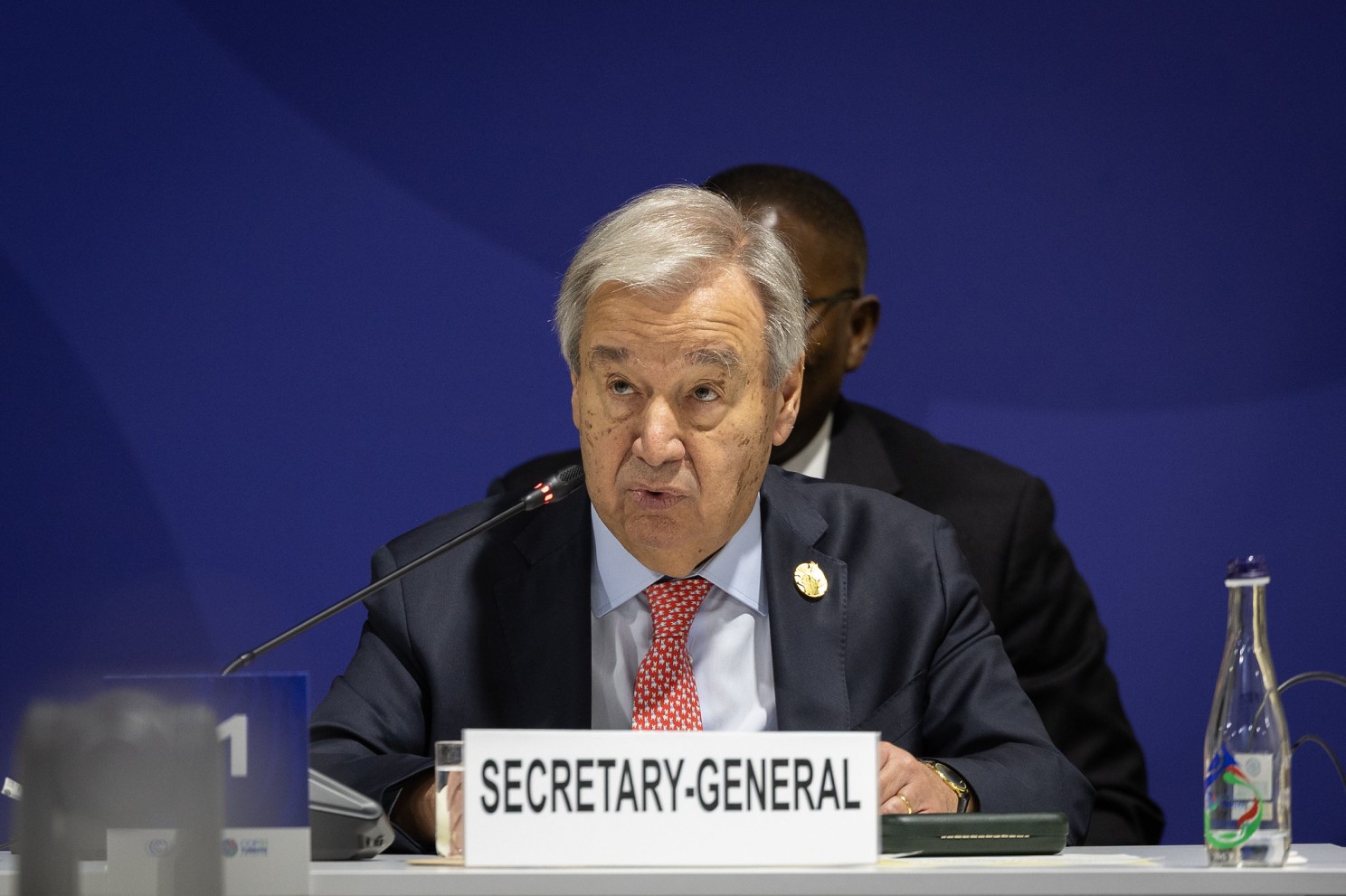
    UN Secretary-General António Guterres at the high-level event on Early Warnings for All, 11 November. Photo: © UN Climate Change - Kiara Worth (CC BY-NC-SA 4.0)
    UN Secretary-General António Guterres at the high-level event on Early Warnings for All, 11 November. Photo: © UN Climate Change – Kiara Worth (CC BY-NC-SA 4.0)

    António Guterres, UN Secretary-General: proposed a “climate justice compact” with four pillars: a just transition away from fossil fuels, starting with national plans; adaptation and early warning; adequate, affordable finance; and cooperation on implementation. He said “polluters must pay”.Recep Tayyip Erdoğan, President of Türkiye (host): admitted that three decades of talks have not delivered enough results, and repeated the aim of an “Implementation COP”.Anthony Albanese, Prime Minister of Australia (President of Negotiations’ country): COP31 must deliver practical results: clean energy, electrification, oceans, and climate finance for those who need it most. He called for solidarity with Pacific islands.Lula da Silva, President of Brazil (COP30 host): climate is losing ground to wars and trade disputes. Brazil will develop national roadmaps to cut fossil fuel dependence and end deforestation. His speech was read by his environment minister.LDC Chair, Ambassador Adão Soares Barbosa: finance must be accessible, grant-based and predictable, and access must be simplified at COP31.Landlocked developing countries (LLDCs): “A plan that cannot be financed protects no one.”G77 and China: participation in the just transition must be more than attendance.

    • António Guterres, UN Secretary-General: proposed a “climate justice compact” with four pillars: a just transition away from fossil fuels, starting with national plans; adaptation and early warning; adequate, affordable finance; and cooperation on implementation. He said “polluters must pay”.
    • Recep Tayyip Erdoğan, President of Türkiye (host): admitted that three decades of talks have not delivered enough results, and repeated the aim of an “Implementation COP”.
    • Anthony Albanese, Prime Minister of Australia (President of Negotiations’ country): COP31 must deliver practical results: clean energy, electrification, oceans, and climate finance for those who need it most. He called for solidarity with Pacific islands.
    • Lula da Silva, President of Brazil (COP30 host): climate is losing ground to wars and trade disputes. Brazil will develop national roadmaps to cut fossil fuel dependence and end deforestation. His speech was read by his environment minister.
    • LDC Chair, Ambassador Adão Soares Barbosa: finance must be accessible, grant-based and predictable, and access must be simplified at COP31.
    • Landlocked developing countries (LLDCs): “A plan that cannot be financed protects no one.”
    • G77 and China: participation in the just transition must be more than attendance.

    Who was missing? About 40 leaders were due to speak, but Nigeria, Kenya, Egypt, the Netherlands and Sweden dropped off the list in the last six days. Civil society gave the “Fossil of the Day” award to several European countries, Japan and Canada for not attending.

    🧭 So, who stands where?

    In one line: developing countries want more public money and new tools to use it, like the LDC platform. Developed countries accept the GEF cut, want more countries to contribute, and resist new institutions.

    💡 My takeaways from Day 3

    One. Speeches are not pledges. Leaders named the problem well. Guterres asked polluters to pay, and Erdoğan admitted three decades of talks have not delivered enough. But on the day the world’s leaders were in the room, no new money for adaptation or loss and damage was reported.

    Two. The LLDCs said it best. “A plan that cannot be financed protects no one.” Countries have written their adaptation plans. Now they need help to turn them into projects. The LDC NAP platform is a concrete idea to do that, and it is one to follow in the draft decision.

    Three. Less money, same promises. The GEF has 27% less in its new round, at the same time as the LDCs ask for tripling adaptation finance. That is the resilience gap getting wider, not smaller.

    📖 Words of the day

    Leaders’ Summit: the part of COP31 where heads of state and government speak, held on 11 and 12 November to give the talks a political push.Climate justice compact: Guterres’s proposed agreement on shared responsibility. Its form is not yet defined.GEF (Global Environment Facility): one of the main funds that serve the UN climate talks.Replenishment: a funding round where donor countries pledge new money to a fund. GEF-9 is the ninth one.NAP (national adaptation plan): a country’s plan to prepare for climate impacts.LEG (LDC Expert Group): experts who help the least developed countries with their adaptation plans.Draft conclusions: a short procedural text, often agreeing to continue work.Windfall tax: an extra tax on unusually large profits.

    • Leaders’ Summit: the part of COP31 where heads of state and government speak, held on 11 and 12 November to give the talks a political push.
    • Climate justice compact: Guterres’s proposed agreement on shared responsibility. Its form is not yet defined.
    • GEF (Global Environment Facility): one of the main funds that serve the UN climate talks.
    • Replenishment: a funding round where donor countries pledge new money to a fund. GEF-9 is the ninth one.
    • NAP (national adaptation plan): a country’s plan to prepare for climate impacts.
    • LEG (LDC Expert Group): experts who help the least developed countries with their adaptation plans.
    • Draft conclusions: a short procedural text, often agreeing to continue work.
    • Windfall tax: an extra tax on unusually large profits.

    👀 What to watch on Day 4?

    • The second day of the Leaders’ Summit, and the Pacific Resilience Facility pledging event: will anyone bring new money?
    • 13 November: Finance and Trade Day, and Chris Bowen’s summary of the cover decision.
    • The first draft texts on adaptation and mitigation. I will compare them with the June Bonn texts.

    See you tomorrow.

    Abdirabi

    📚 Sources

    Earth Negotiations Bulletin (IISD), Vol. 12 No. 904, daily report for 11 November 2026: https://enb.iisd.org/antalya-un-climate-change-conference-cop31-daily-report-11nov2026UN News, Guterres urges climate justice pact: https://news.un.org/en/story/2026/11/1168783Climate Home News, COP31 Bulletin Day 3: https://www.climatechangenews.com/2026/11/11/cop31-bulletin-day-3-with-the-people-stuck-outside-world-leaders-jet-in/WMO, COP31 Leaders’ Summit: https://wmo.int/media/news/cop31-leaders-summit-turn-commitments-actionUS News (Reuters), world leaders speak at COP31: https://www.usnews.com/news/world/articles/2026-11-11/world-leaders-speak-at-cop31-climate-conferenceUNFCCC, Antalya Leaders’ Summit: https://unfccc.int/cop31/high-levelDhaka Tribune, interview with the LDC Chair: https://dhakatribune.com/interviews-and-dialogue/424394/ldc-chair-accessible-grant-based-predictableDaily News Egypt, Leaders’ Summit: https://dailynewsegypt.com/2026/11/11/egypt-calls-for-affordable-climate-finance-at-cop31-leaders-summit-in-antalya/

    First published on LinkedIn in The Resilience Gap newsletter by Abdirabi Mohamed. Read the original.
  • Sahan Tracker | COP31, Day 2: The talks got real. The money got smaller.

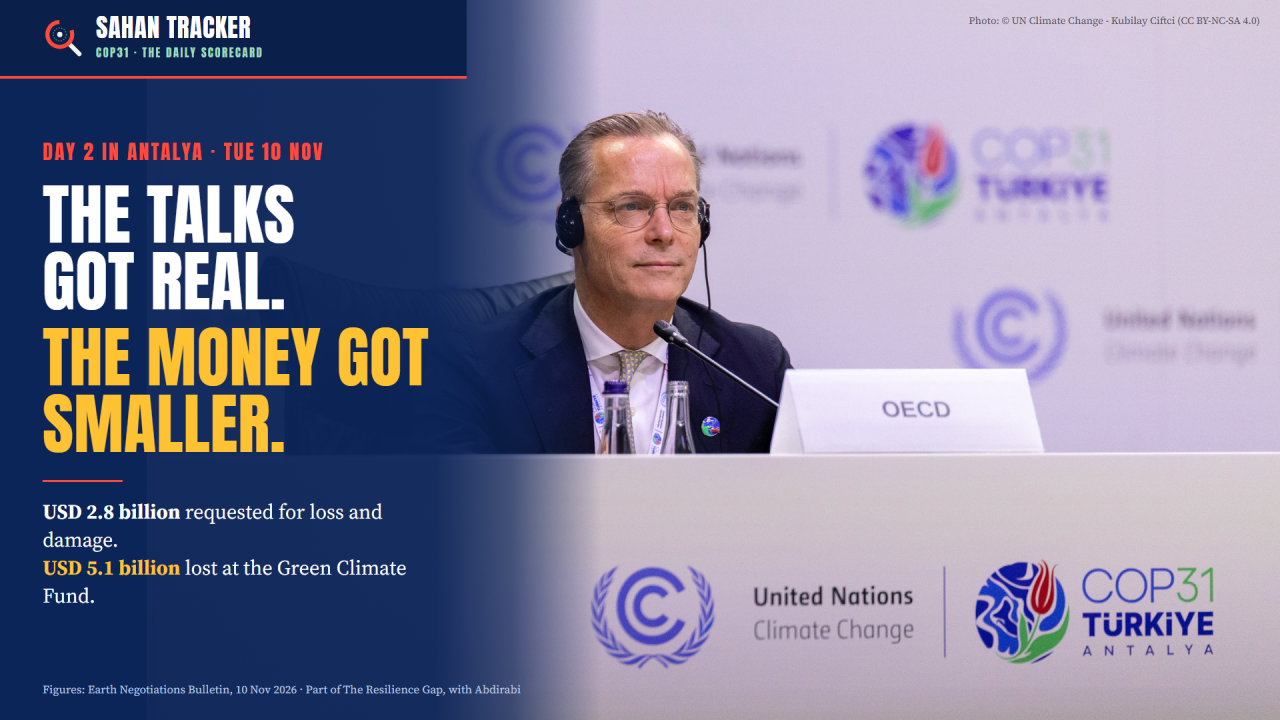
    Sahan Tracker | COP31, Day 2: The talks got real. The money got smaller.

    Tuesday 10 November 2026 · Antalya, Türkiye · Part of The Resilience Gap, with Abdirabi

    What is Sahan Tracker? It is my daily update during COP31, the UN climate conference in Antalya, Türkiye (9 to 20 November 2026). During COP31, The Resilience Gap comes to you every day as Sahan Tracker, focused on what is happening inside the negotiation rooms. After COP31, we go back to one edition a week.

    These are my notes from the day. I follow the talks from my home, reading the Earth Negotiations Bulletin, the UN, journalists and colleagues who are in the rooms, and I put it together in plain words. Every hard word gets an explanation.

    ⏱️ Day 2 in one minute

    The real negotiations started. On Tuesday morning, countries went straight into formal talks. The finance talks ran all day and into the evening.Tripling adaptation finance came back, in two different rooms. Developing countries still regret that it has no topic of its own.Poorer countries have asked the loss and damage fund for USD 2.8 billion. Rich countries say it is too early to give the fund new instructions.Support is shrinking. Cuts by the UK and the US to the Green Climate Fund mean USD 5.1 billion less in one year.On the energy side, Brazil handed its roadmap for moving away from fossil fuels to UN Secretary-General António Guterres.

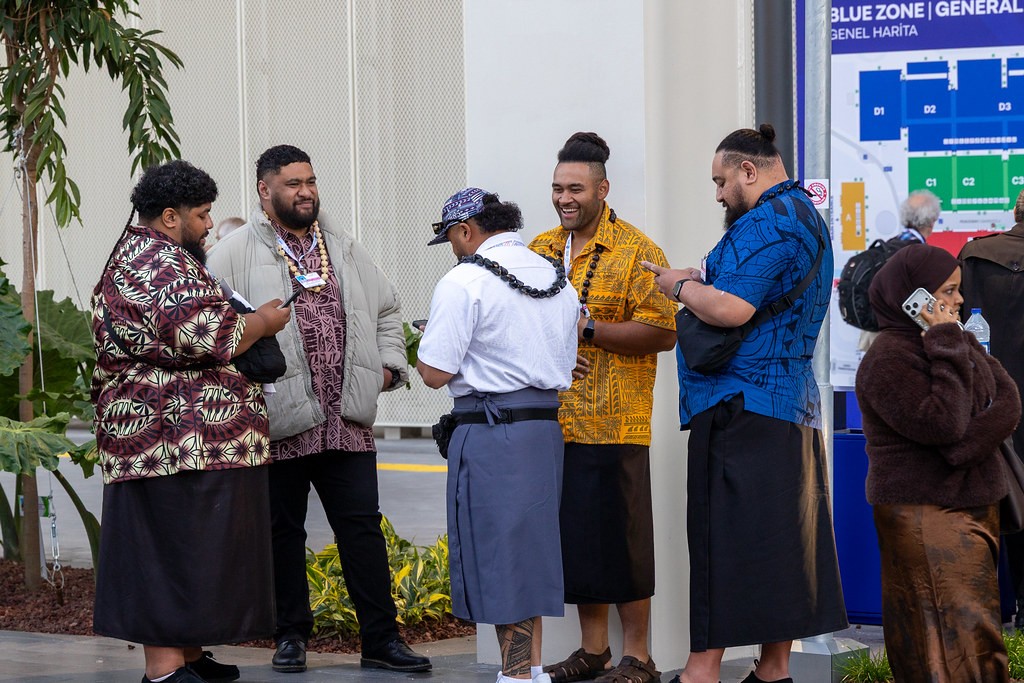
    Delegates around the COP31 venue in Antalya. Photo: © UN Climate Change - Kubilay Ciftci (CC BY-NC-SA 4.0)
    Delegates around the COP31 venue in Antalya. Photo: © UN Climate Change – Kubilay Ciftci (CC BY-NC-SA 4.0)
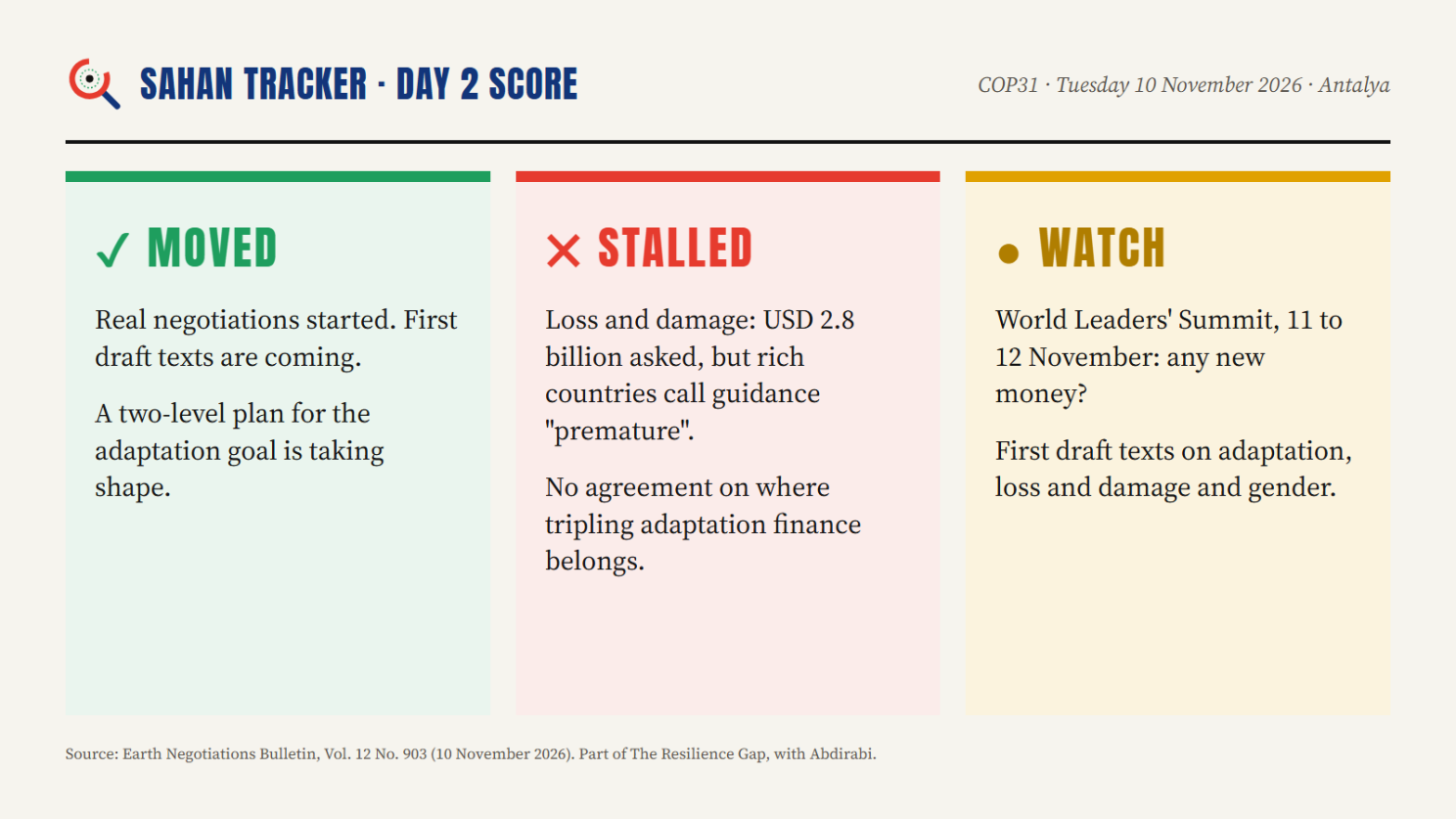
    • The real negotiations started. On Tuesday morning, countries went straight into formal talks. The finance talks ran all day and into the evening.
    • Tripling adaptation finance came back, in two different rooms. Developing countries still regret that it has no topic of its own.
    • Poorer countries have asked the loss and damage fund for USD 2.8 billion. Rich countries say it is too early to give the fund new instructions.
    • Support is shrinking. Cuts by the UK and the US to the Green Climate Fund mean USD 5.1 billion less in one year.
    • On the energy side, Brazil handed its roadmap for moving away from fossil fuels to UN Secretary-General António Guterres.

    🟢 What moved forward?

    The work finally started. Day 1 was speeches and the agenda fight. Day 2 was the first full day of technical work. In small groups, the people leading each topic (called co-facilitators) asked countries for their views, so they can write the first draft texts. Delegates told the Earth Negotiations Bulletin it felt like “déjà vu”, with old positions repeated. But by the evening, the first possible areas of agreement started to appear.

    A shape for the adaptation goal. In the talks on the Global Goal on Adaptation, the shared goal for making the world more resilient, countries broadly agreed on a two-level plan: a small expert group for the technical work on indicators, plus a political process to test them. Youth and women’s groups asked that the indicators show impacts on young people, children, women and girls. A first draft text is coming.

    A shape for a just transition. In the talks on a fair shift to clean economies for workers and communities, countries also moved towards a two-level structure: a political body plus a technical arm.

    Help for the switch to clean energy. Tuesday was Energy and Transport Day, with around 370 events. An Australia-led declaration aims for 300 million homes with rooftop solar by 2030, signed by countries including Bangladesh, Kenya, Nigeria and Vanuatu. A new initiative of the Powering Past Coal Alliance will help coal-dependent countries in the Global South reach transition funding. These are voluntary initiatives. They do not change the negotiations.

    🔴 What got stuck?

    Who decides how adaptation money grows? Developing countries (the G77 and China) want the climate finance talks to focus on Article 9.1 of the Paris Agreement: rich countries shall provide finance. The EU wants a broad view of all climate finance, with tripling adaptation finance inside it. The UK, EU and Norway want tripling discussed in the finance talks, where it sits under the existing finance goal. Developing countries want clear starting points and ways to track the money.

    Loss and damage: a clear need, a slow answer. The loss and damage fund helps countries recover from climate disasters. 119 countries have asked it for USD 2.8 billion. Small island states, the African Group and Latin American countries (AILAC) want short political guidance that names this need and urges countries to pay what they pledged. The EU, UK and Canada say guidance is “premature”.

    The Adaptation Fund is short of money. The least developed countries, the Like-Minded Developing Countries and the Arab Group warned of a “serious shortfall” in contributions.

    How long to keep cutting emissions together? Countries broadly support continuing the programme on cutting emissions, but disagree on how long: to 2030, to 2040, or with no end date. Switzerland proposed a permanent committee. The Arab Group opposed it.

    Even the final deal is questioned. When heads of delegation met on the “cover decision”, the one text meant to sum up COP31, some asked why everyone assumes there will be one. So the Presidency may have to negotiate its purpose too.

    Getting to the venue. Some delegates needed three hours or more to reach the venue on crowded trams and shuttles, and morning talks started late.

    💰 The money picture

    This is the part of Day 2 I keep coming back to. UK and US cuts to the Green Climate Fund mean USD 5.1 billion less in one year. The latest round of funding for the Global Environment Facility is the lowest in its history. One observer told the Earth Negotiations Bulletin the direction is “clearly the wrong one”.

    So the needs are named: USD 2.8 billion for loss and damage alone. But the money behind them is moving the other way.

    🗣️ Who said what?

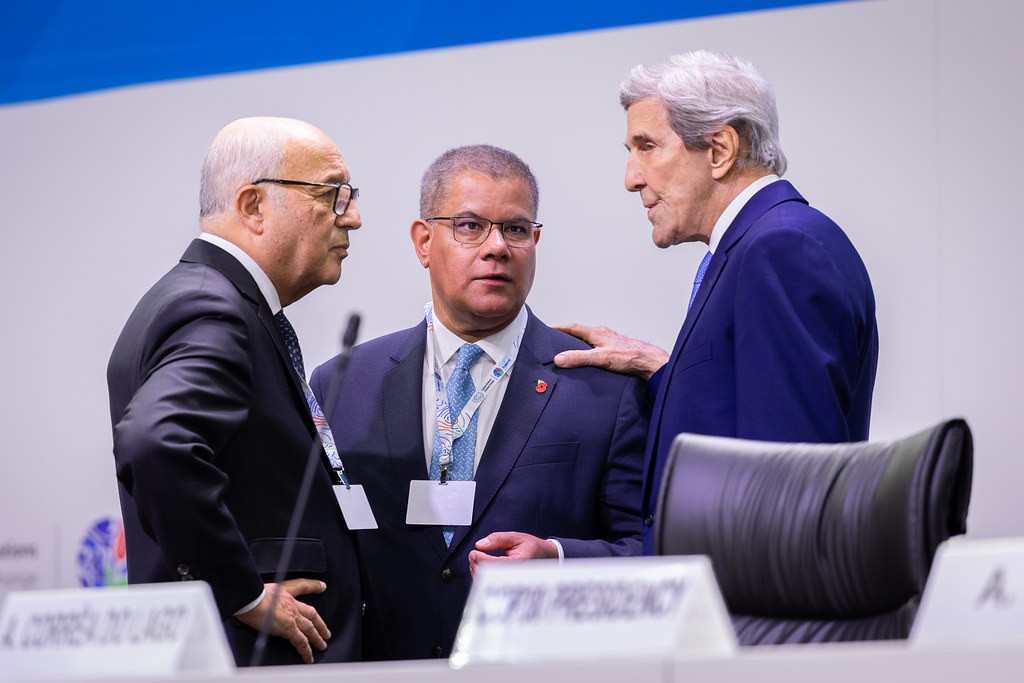
    High-level guests at the COP30 Presidency event on the roadmap to transition away from fossil fuels, 10 November. Photo: © UN Climate Change - Kiara Worth (CC BY-NC-SA 4.0)
    High-level guests at the COP30 Presidency event on the roadmap to transition away from fossil fuels, 10 November. Photo: © UN Climate Change – Kiara Worth (CC BY-NC-SA 4.0)

    Least developed countries: a “serious shortfall” in the Adaptation Fund. They also raised gaps in weather observation and early warning, and asked for predictable money for women-led projects.G77 and China: the finance talks must be about Article 9.1. They regret there is no topic for tripling adaptation finance, and want “common but differentiated responsibilities” in the adaptation text.African Group: wants guidance for the loss and damage fund. A just transition must include informal economies.Small island states (AOSIS): “chronic challenges” in getting finance, and a call for grants, not loans, for adaptation.European Union: finance talks should cover all of Article 9, including tripling. Guidance for the loss and damage fund is premature. Opposes “common but differentiated responsibilities” in the adaptation text.UK, Norway, Canada: tripling belongs in the finance talks.António Guterres, UN Secretary-General: asked every country for its own national plan to move away from fossil fuels, with timelines and financing needs, and progress by 2028.André Corrêa do Lago, COP30 President: the fossil fuel roadmap is “not a mandate”.

    • Least developed countries: a “serious shortfall” in the Adaptation Fund. They also raised gaps in weather observation and early warning, and asked for predictable money for women-led projects.
    • G77 and China: the finance talks must be about Article 9.1. They regret there is no topic for tripling adaptation finance, and want “common but differentiated responsibilities” in the adaptation text.
    • African Group: wants guidance for the loss and damage fund. A just transition must include informal economies.
    • Small island states (AOSIS): “chronic challenges” in getting finance, and a call for grants, not loans, for adaptation.
    • European Union: finance talks should cover all of Article 9, including tripling. Guidance for the loss and damage fund is premature. Opposes “common but differentiated responsibilities” in the adaptation text.
    • UK, Norway, Canada: tripling belongs in the finance talks.
    • António Guterres, UN Secretary-General: asked every country for its own national plan to move away from fossil fuels, with timelines and financing needs, and progress by 2028.
    • André Corrêa do Lago, COP30 President: the fossil fuel roadmap is “not a mandate”.

    🧭 So, who stands where?

    In one line: developing countries pull the money talks towards a legal duty to pay and clear numbers for tripling. Developed countries keep it broad, under the existing finance goal, and resist new guidance. That split was there on Day 1, and on Day 2 it showed up in almost every room.

    💡 My takeaways from Day 2

    One. The needs are clear. The money is not. USD 2.8 billion requested for loss and damage, a “serious shortfall” in the Adaptation Fund, and at the same time USD 5.1 billion less for the Green Climate Fund. This is the resilience gap in one day.

    Two. “Premature” is a word to watch. When rich countries call guidance “premature”, they are asking for more time. For communities hit by floods and droughts this year, time is the one thing they do not have.

    Three. Small details shape big texts. Whether tripling adaptation finance is discussed in the finance room or the adaptation room sounds technical. But it decides whether it ends up with a number and a way to track it, or stays a promise.

    📖 Words of the day

    Contact group: a formal negotiating group on one topic, usually open to observers.Co-facilitators: the two people who lead the talks on one topic and write the draft texts.Two-tier: a structure with two levels, such as an expert group plus a political process.Means of implementation: what countries need to act: finance, technology and training.Loss and damage: climate harm that is too late to prevent, like homes lost to floods.Share of proceeds: a small part of carbon market credits that goes to the Adaptation Fund.CBDR (common but differentiated responsibilities): all countries share the goal, but have different duties.

    • Contact group: a formal negotiating group on one topic, usually open to observers.
    • Co-facilitators: the two people who lead the talks on one topic and write the draft texts.
    • Two-tier: a structure with two levels, such as an expert group plus a political process.
    • Means of implementation: what countries need to act: finance, technology and training.
    • Loss and damage: climate harm that is too late to prevent, like homes lost to floods.
    • Share of proceeds: a small part of carbon market credits that goes to the Adaptation Fund.
    • CBDR (common but differentiated responsibilities): all countries share the goal, but have different duties.

    👀 What to watch on Day 3?

    • The first draft texts on the adaptation goal, the loss and damage fund and gender.
    • The World Leaders’ Summit on 11 and 12 November: will any leader bring new money for adaptation or loss and damage?
    • 13 November: Finance and Trade Day, and Chris Bowen’s summary of the cover decision.

    See you tomorrow.

    Abdirabi

    📚 Sources

    Earth Negotiations Bulletin (IISD), Vol. 12 No. 903, daily report for 10 November 2026: https://enb.iisd.org/sites/default/files/2026-11/enb12903e.pdfUNFCCC, press conference transcript, 10 November: https://unfccc.int/news/transcript-of-press-conference-opening-remarks-today-of-cop31-president-president-of-negotiations-unCarbon Brief Connect, fossil fuel roadmap presented at COP31: https://connect.carbonbrief.org/t/fossil-fuel-roadmap-presented-at-cop31/120UN News (via now.solar), energy transition takes centre stage: https://now.solar/2026/11/11/cop31-energy-transition-takes-centre-stage-as-countries-map-path-beyond-fossil-fuels-un-news/Climate Home News, COP31 Bulletin Day 2: https://www.climatechangenews.com/2026/11/10/cop31-bulletin-day-2-energy-day-off-to-slow-start-amid-transport-chaos/TRT World, day two programme: https://www.trtworld.com/article/adc1626e31f4

    First published on LinkedIn in The Resilience Gap newsletter by Abdirabi Mohamed. Read the original.
  • Sahan Tracker | COP31, Day 1: The talks open, and the first fight is about money

    Sahan Tracker | COP31, Day 1: The talks open, and the first fight is about money

    Monday 9 November 2026 · Antalya, Türkiye · Part of The Resilience Gap, with Abdirabi

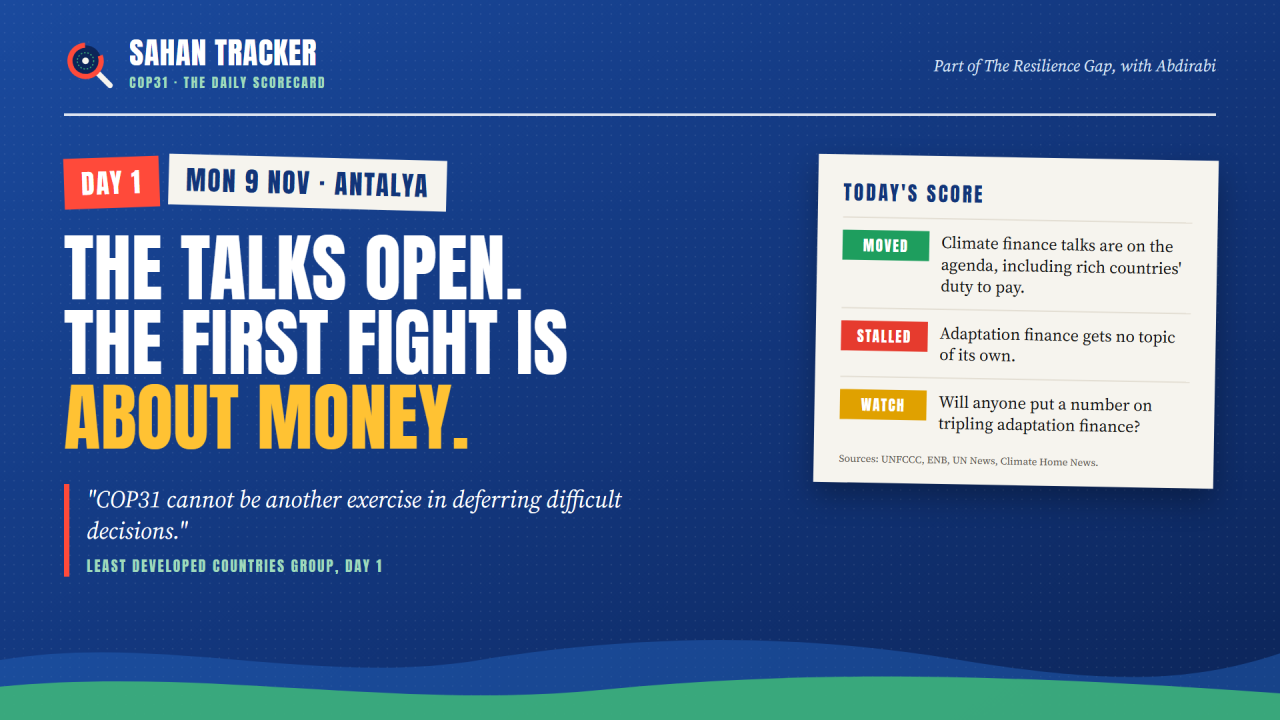
    What is Sahan Tracker? It is my daily update during the days of COP31, the UN climate conference in Antalya, Türkiye (9 to 20 November 2026). It is part of The Resilience Gap. During COP31, The Resilience Gap comes to you every day as Sahan Tracker, focused on what is happening inside the negotiation rooms of Antalya. After COP31, we go back to one edition a week.

    Every day you get a simple score: what moved forward, what got stuck, and what to watch next. Climate talks use a lot of difficult language, so every hard word gets a plain explanation.

    ⏱️ Day 1 in one minute

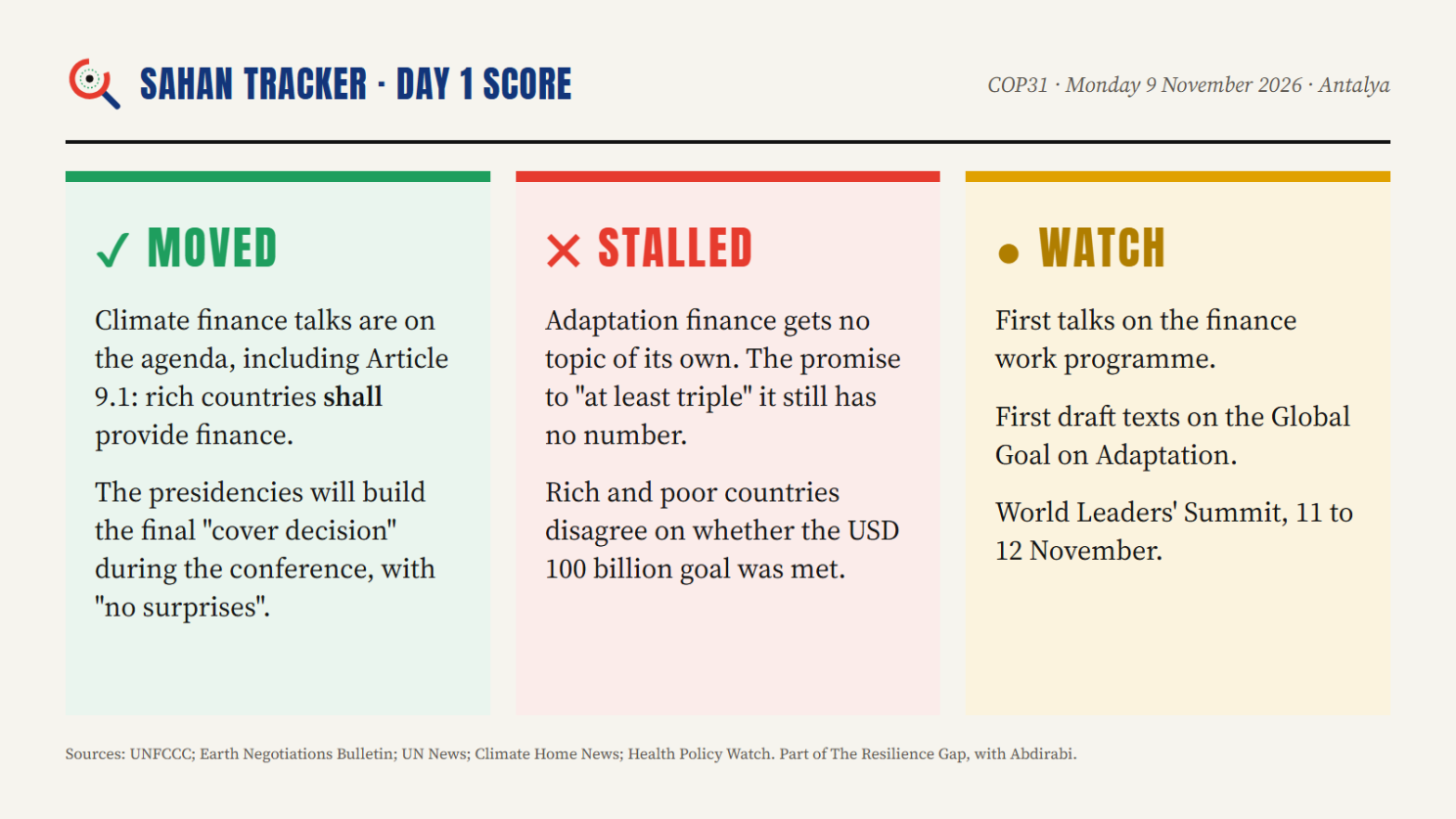
    COP31 opened about one and a half hours late. Countries argued until late Sunday night about the agenda, the official list of topics they will negotiate.The fight was about money. Developing countries got climate finance talks onto the agenda, including the rule that rich countries “shall” provide finance.Adaptation finance, the money that helps countries cope with climate impacts, did not get its own topic. It will be discussed inside other topics.COP31 has two presidents. Türkiye’s Murat Kurum leads the conference. Australia’s Chris Bowen leads the negotiations.The group of least developed countries called the expected overshoot of 1.5°C “a grave betrayal” of the countries that did least to cause the crisis.

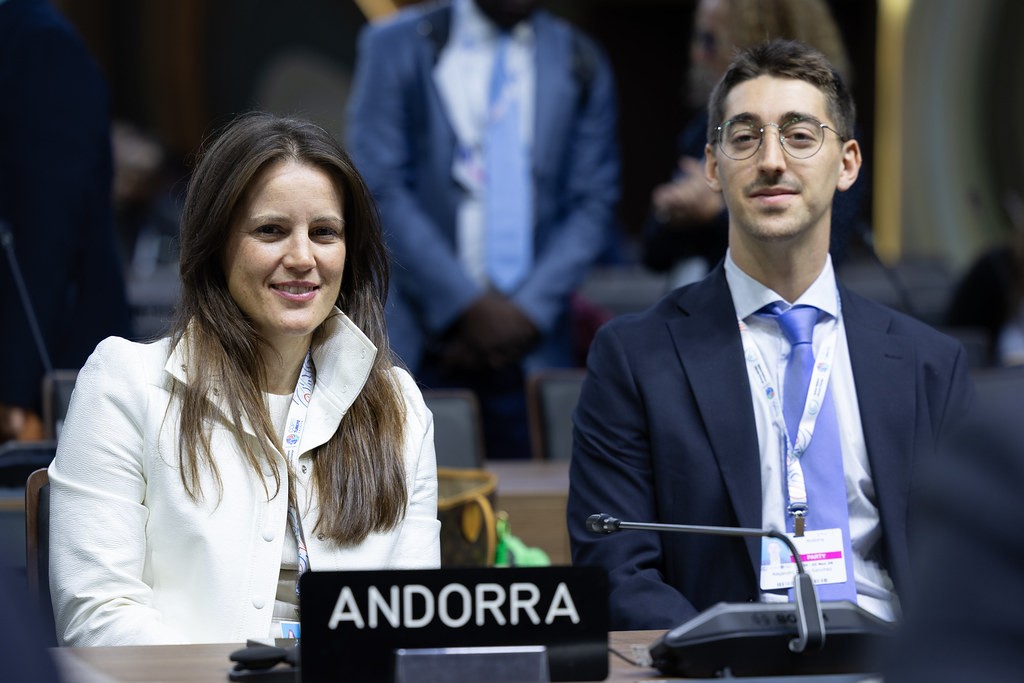
    Country delegations take their seats at the opening of COP31. Photo: © UN Climate Change - Kiara Worth (CC BY-NC-SA 4.0)
    Country delegations take their seats at the opening of COP31. Photo: © UN Climate Change – Kiara Worth (CC BY-NC-SA 4.0)
    • COP31 opened about one and a half hours late. Countries argued until late Sunday night about the agenda, the official list of topics they will negotiate.
    • The fight was about money. Developing countries got climate finance talks onto the agenda, including the rule that rich countries “shall” provide finance.
    • Adaptation finance, the money that helps countries cope with climate impacts, did not get its own topic. It will be discussed inside other topics.
    • COP31 has two presidents. Türkiye’s Murat Kurum leads the conference. Australia’s Chris Bowen leads the negotiations.
    • The group of least developed countries called the expected overshoot of 1.5°C “a grave betrayal” of the countries that did least to cause the crisis.

    🟢 What moved forward?

    Finance is on the table. The Climate Finance Work Programme is on the agenda. This is a two-year process agreed at COP30 in Belém, Brazil. It includes Article 9.1 of the Paris Agreement, which says developed countries shall provide finance to developing countries. “Shall” means a duty, not a wish. Getting this on the agenda was the main demand of the G77 and China, the large group of developing countries.

    A plan for the final deal. Chris Bowen said the presidencies will write an overall “cover decision” step by step during the conference, not only on the last night. He promised “no surprises”. A first high-level summary is expected on Friday 13 November, with written comments from countries until Saturday 14 November.

    New voluntary initiatives. Murat Kurum launched a “35-by-35” pledge: electricity should make up 35% of all energy used by 2035. He also launched a Climate Implementation Bridge to connect climate projects with investors, and asked every country to name a contact person for the voluntary Action Agenda. Türkiye also launched the Antalya Initiative for Resilient Health Systems. All of these are voluntary: countries choose whether to join. By Monday night, no country had joined the health initiative yet.

    🔴 What got stuck?

    Adaptation finance has no seat of its own. The African Group asked for three extra agenda items: tripling adaptation finance, trade measures, and the funding needs of the Green Climate Fund. All three were left off “without prejudice”. This means they can still be raised under other topics. Why it matters: at COP30, countries agreed to “at least triple” adaptation finance by 2035, but they set no starting year and no dollar figure. Without its own item, it is harder to turn that promise into a real number.

    Some topics pushed back. Nepal asked for formal talks on mountains after its flood disaster. Instead, the Presidency will hold informal consultations. A regular review of the UN climate finance system was moved to COP32.

    An old argument about USD 100 billion. Rich countries promised USD 100 billion a year in climate finance. In the first talks on long-term finance, the EU, UK, Canada, Japan, Norway and the Environmental Integrity Group want to record that the goal was met in 2022, 2023 and 2024. The African Group, the Arab Group and the Like-Minded Developing Countries say it was not met, because 2020 and 2021 fell short. A CARE analysis adds that repayments on public climate loans rose from USD 6.9 billion in 2020 to USD 20.1 billion in 2024. This is why many developing countries ask for grants, not loans.

    Health, again without money. Day 1 was the theme day on food, agriculture and health. No new money for health was announced, for the third COP in a row. Health has no topic of its own in the formal talks.

    🗣️ Who said what?

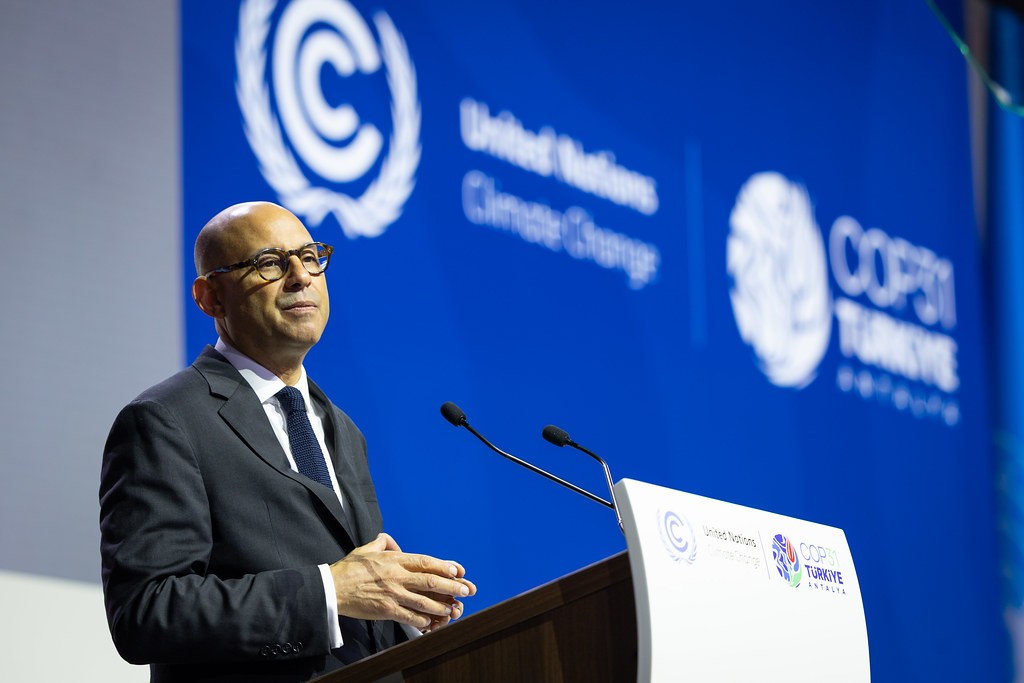
    Simon Stiell, UN Climate Change Executive Secretary, gives the opening remarks at COP31. Photo: © UN Climate Change - Kiara Worth (CC BY-NC-SA 4.0)
    Simon Stiell, UN Climate Change Executive Secretary, gives the opening remarks at COP31. Photo: © UN Climate Change – Kiara Worth (CC BY-NC-SA 4.0)

    Least developed countries (44 countries): “COP31 cannot be another exercise in deferring difficult decisions.” They want faster emission cuts, access to finance and real protection for people most at risk.African Group: African economies need USD 1.3 to 1.6 trillion by 2030, as grants or low-cost finance, not debt.European Union: Supports at least tripling adaptation finance by 2035, but inside the existing finance goal agreed at COP29. Does not want a new agenda item on trade.Umbrella Group (the UK speaking): Adaptation finance “is not an orphan”. It will be discussed under the finance work programme.India: Supports developing countries on Article 9.1. Wants talks on trade measures such as the EU’s carbon border tax.Simon Stiell, UN climate chief: Progress is not fast enough or fair enough. COP31 must triple adaptation finance, make finance easier to access, triple renewable energy by 2030 and cut methane.Chris Bowen, President of Negotiations: The countries that need climate finance most get the least.

    • Least developed countries (44 countries): “COP31 cannot be another exercise in deferring difficult decisions.” They want faster emission cuts, access to finance and real protection for people most at risk.
    • African Group: African economies need USD 1.3 to 1.6 trillion by 2030, as grants or low-cost finance, not debt.
    • European Union: Supports at least tripling adaptation finance by 2035, but inside the existing finance goal agreed at COP29. Does not want a new agenda item on trade.
    • Umbrella Group (the UK speaking): Adaptation finance “is not an orphan”. It will be discussed under the finance work programme.
    • India: Supports developing countries on Article 9.1. Wants talks on trade measures such as the EU’s carbon border tax.
    • Simon Stiell, UN climate chief: Progress is not fast enough or fair enough. COP31 must triple adaptation finance, make finance easier to access, triple renewable energy by 2030 and cut methane.
    • Chris Bowen, President of Negotiations: The countries that need climate finance most get the least.

    🧭 So, who stands where?

    Most developing countries stand together on one question: how will rich countries meet their legal duty to pay? The EU and its allies are ready to talk about adaptation finance, but only inside the existing finance goal, and they resist new promises. Before COP31, EU Climate Commissioner Wopke Hoekstra said demands for new finance commitments were “dead in the water”. Expect this split to shape the whole conference.

    📖 Words of the day

    Agenda: the official list of topics countries negotiate. If a topic is not on it, there is no formal place to decide on it.CMA: the meeting of the countries that signed the Paris Agreement. It runs alongside the COP.Cover decision: one political text that sums up the main results of a COP.Action Agenda: voluntary pledges and projects led by the host country. Not negotiated by all countries, and not binding.NCQG: the climate finance goal agreed at COP29: USD 300 billion a year by 2035.“Without prejudice”: left out for now, without closing the door for later.

    • Agenda: the official list of topics countries negotiate. If a topic is not on it, there is no formal place to decide on it.
    • CMA: the meeting of the countries that signed the Paris Agreement. It runs alongside the COP.
    • Cover decision: one political text that sums up the main results of a COP.
    • Action Agenda: voluntary pledges and projects led by the host country. Not negotiated by all countries, and not binding.
    • NCQG: the climate finance goal agreed at COP29: USD 300 billion a year by 2035.
    • “Without prejudice”: left out for now, without closing the door for later.

    👀 What to watch on Day 2?

    • The first talks on the finance work programme: will anyone put a number or a starting year on tripling adaptation finance?
    • The first draft texts on the Global Goal on Adaptation, the shared goal for making the world more resilient.
    • Any early sign of what the cover decision will say about adaptation finance.
    • The World Leaders’ Summit on 11 and 12 November.

    See you tomorrow.

    Abdirabi

    📚 Sources

    UN News, “COP31 opens in Antalya”: https://news.un.org/en/story/2026/11/1168763Earth Negotiations Bulletin (IISD), highlights for 9 November 2026: https://enb.iisd.org/antalya-un-climate-change-conference-cop31-09Nov2026Climate Home News, COP31 Bulletin Day 1: https://www.climatechangenews.com/2026/11/09/cop31-bulletin-day-1-australia-says-cover-decision-wont-spring-surprises/Health Policy Watch, “COP31 opens under pressure”: https://healthpolicy-watch.news/declarations-do-not-protect-people-cop31-opens-under-pressure-to-deliver-results-over-words/Business Standard, climate finance clash: https://www.business-standard.com/world-news/cop31-antalya-climate-finance-eu-g77-india-climate-talks-126111000162_1.htmlTurkish Minute (AFP), early dispute over finance: https://www.turkishminute.com/2026/11/09/cop31-opens-in-antalya-with-early-dispute-over-climate-finance/MyJoyOnline, leaders call for practical action: https://www.myjoyonline.com/cop31-leaders-call-for-shift-from-climate-promises-to-practical-action-as-implementation-takes-centre-stage/J. Silali (Substack), group statements: https://josephsilali.substack.com/p/cop31-opens-in-antalya-stiell-kurum

    First published on LinkedIn in The Resilience Gap newsletter by Abdirabi Mohamed. Read the original.
  • An implementation COP. What it must mean for the countries waiting longest.

    An implementation COP. What it must mean for the countries waiting longest.

    Welcome to The Resilience Gap. Every week I will track one thing: the distance between climate promises and the communities still waiting for them.

    I am Abdirabi Mohamed, a youth climate activist from Somalia. I lead PUSAN, the Punt. Sustainable Agri-livestock Network, and I am the Contact Point of LCOY Somalia 2026. Here I explain climate adaptation, resilience and finance in simple words, from the frontline.

    On 9 November, COP31 opens in Antalya, Türkiye. The COP31 President-Designate, Murat Kurum, calls it an implementation-focused summit. On its official Instagram account, the Presidency says COP31 aims to “help close the gap between pledges and progress.” Its three principles are Dialogue, Consensus and Action.

    That gap is why this newsletter exists. So this first edition asks one question: what must an implementation COP mean for the countries that have waited longest?

    The Delivery Gap

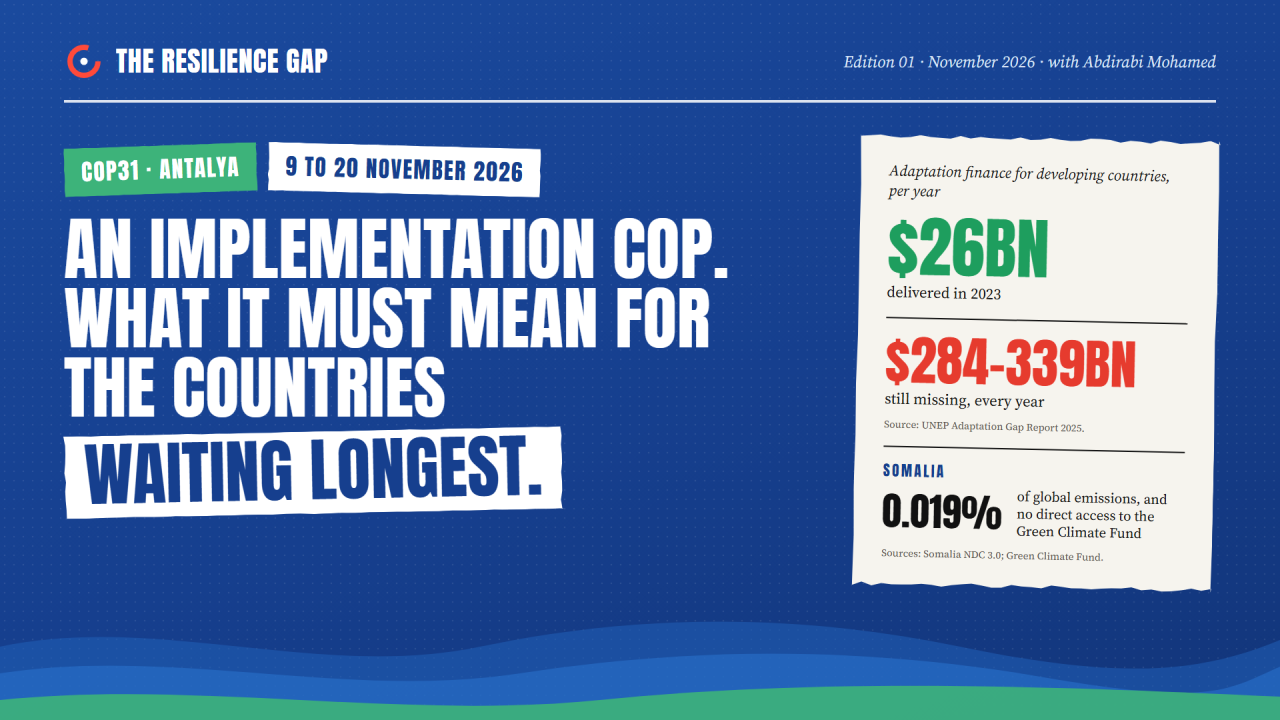
    Start with adaptation finance, the money that helps communities prepare for drought, floods and heat. In 2023, developing countries received USD 26 billion in international public adaptation finance. The gap between what they receive and what they need is USD 284 to 339 billion every year, according to the UNEP Adaptation Gap Report 2025.

    At COP29 in Baku, countries agreed a new climate finance goal: at least USD 300 billion a year for developing countries by 2035, and a call to scale up finance from all sources to USD 1.3 trillion a year. That is a promise for the next ten years. Implementation means turning it into money that reaches people.

    Now look at Somalia. Somalia produces 0.019% of global emissions, according to its NDC 3.0. Yet carrying out that NDC needs about USD 11.5 billion up to 2035, and of its 34% emissions target, 29% depends on international support. Somalia still has no Direct Access Entity to the Green Climate Fund, so no Somali institution can receive money from the Fund directly.

    At the same time, 5.4 million people in Somalia face crisis levels of hunger or worse (IPC Phase 3 and above, October to December 2026). And 3.3 million people are internally displaced (Humanitarian Needs and Response Plan 2026).

    A country that did almost nothing to cause this crisis is paying for it. That is the delivery gap.

    The Progress

    There is progress, and it deserves to be named.

    In Somalia, young people are moving from being consulted to shaping the national position. After the LCOY Somalia 2026 national conference, the Director of Climate Change at the Ministry of Environment and Climate Change committed to make the National Youth Statement part of Somalia’s national position at COP31. This is a commitment, not yet a result. The Resilience Gap will report on whether it is kept.

    The COP31 Action Agenda also opens doors. Three of its ten themes match the work of young people on the frontline: 03 Food Security, 06 Youth and Education, and 09 Rio Synergy, which links the climate, biodiversity and desertification conventions. Theme 05, the Climate Implementation Bridge, is named for exactly the problem this newsletter tracks. For networks like PUSAN, which work on climate-resilient farming and livestock, these are the themes to watch.

    The Frontline

    The frontline this week is young Somalis themselves.

    Between July and October 2026, LCOY Somalia held four consultations. A launch webinar on 15 July brought together 89 young people. A workshop at Banadir University on 17 July had 40. A pre-LCOY consultation with UNICEF Somalia on 24 September had more than 50. The national conference in Mogadishu on 7 and 8 October had 100. In total there were more than 279 youth participations, plus more than 600 responses to an online survey. Young women were more than 45% of participants.

    This matters in a country where more than 70% of people are under 30.

    The result is the National Youth Statement on Climate Change 2026. It sets out ten priority demands. Each demand is linked to Somalia’s NDC 3.0, its National Adaptation Plan or its National Climate Change Action Plan. Each names a responsible ministry and a timeline. This is what implementation looks like from below: a clear ask, a named owner and a deadline.

    The process was supported by UNICEF Somalia and FAO Somalia, with the Ministry of Environment and Climate Change and the Ministry of Youth and Sports as partners. LCOY Somalia’s delegate to COP31, Abdullahi Adeid, will carry the Statement to Antalya.

    My test for Antalya

    For the countries waiting longest, I will judge COP31 on three questions.

    First, does adaptation finance reach least developed countries in a form they can use? For Somalia, that means support to build direct access, not only more promises.

    Second, does COP31 measure delivery, not only pledges? The second Global Stocktake begins at COP31. It should count what has arrived, not only what was announced.

    Third, do commitments to youth become national action? If the Youth Statement becomes part of Somalia’s position, the next step is to see its demands in budgets and plans.

    What You Can Do

    Read and share the National Youth Statement. Send it to one person who makes decisions on climate in Somalia or in your organisation.

    Ask one question. If you work in a ministry, a UN agency, a fund or an NGO, ask how your work helps Somali institutions get direct access to climate finance.

    Follow Reality Check. From 9 to 20 November I will post a short daily update on what moved, what stalled and what it means for least developed countries.

    Subscribe and forward. If this edition helped you understand the gap, share it with one person who should read it.

    The resilience gap is the distance between climate promises and the communities still waiting for them. Over the next two weeks, we will see whether Antalya makes it shorter.

    Abdirabi

    Sources

    COP31 Presidency, cop31.tr (dates, Action Agenda themes, Dialogue, Consensus, Action, “implementation-focused summit”)

    @turkiyecop31 on Instagram, “How the UN Climate Regime Works” (“help close the gap between pledges and progress”; COP29 finance goal; second Global Stocktake)

    UNEP Adaptation Gap Report 2025 (USD 26 billion delivered in 2023; gap of USD 284 to 339 billion a year)

    Federal Republic of Somalia, NDC 3.0 (0.019% of global emissions; about USD 11.5 billion to 2035; 29% of the 34% target conditional)

    Green Climate Fund (no Somali Direct Access Entity)

    IPC Somalia analysis, October to December 2026 (5.4 million people in Phase 3 and above)

    Somalia Humanitarian Needs and Response Plan 2026 (3.3 million internally displaced)

    LCOY Somalia, National Youth Statement on Climate Change 2026 (consultations, participation figures, ten demands, MoECC commitment; more than 70% under 30)

    First published on LinkedIn in The Resilience Gap newsletter by Abdirabi Mohamed. Read the original.
  • Launching The Resilience Gap

    Launching The Resilience Gap

    Our founder Abdirabi Mohamed launched The Resilience Gap, a newsletter on climate adaptation, resilience and finance. Each edition tracks one thing: the distance between climate promises and the communities still waiting for them.

    The first edition, published ahead of COP31, asked what an “implementation COP” must mean for the countries that have waited longest. Read more about The Resilience Gap.

    Source: updates shared on LinkedIn by Abdirabi Mohamed and LCOY Somalia.